How to Brew Ethiopian Coffee the Traditional Way: A Ceremony of Flavor and Connection
TL;DR:
Traditional Ethiopian coffee brewing is more than a drink—it’s a cultural ritual symbolizing hospitality, respect, and connection. The ceremony involves roasting, grinding, and brewing fresh green beans in a jebena (clay pot), producing an aromatic, strong coffee often served three times. Here’s how to brew Ethiopian coffee the authentic way, from the first roast to the final pour.
Introduction: Where Coffee Culture Began
Ethiopia isn’t just another coffee-producing country—it’s the birthplace of coffee itself.
According to legend, a goatherd named Kaldi discovered coffee when he noticed his goats dancing after eating red cherries. From that discovery grew a tradition that continues today: the Ethiopian coffee ceremony (bunna).
In Ethiopia, coffee isn’t simply consumed; it’s celebrated. The ceremony is a cornerstone of daily life—an act of community, storytelling, and reverence.
It’s also a beautiful example of how coffee connects people, culture, and time.
☕ What Makes Ethiopian Coffee So Unique?
Ethiopian coffee is prized for its vibrant acidity, floral notes, and fruity depth. These flavors are the result of:
-
High-altitude cultivation (1,800–2,200 meters)
-
Rich volcanic soils
-
Heirloom Arabica varietals
-
Traditional natural or washed processing
Whether it’s Yirgacheffe’s jasmine aroma or Sidamo’s blueberry sweetness, Ethiopian coffee’s diversity mirrors the nation’s landscapes and traditions.
But when brewed in the traditional way, the result is a sensory experience that transcends modern coffee culture.
Step 1: Preparing for the Coffee Ceremony
In Ethiopia, the coffee ceremony takes place at home or in social gatherings and may last up to two hours. It’s led by the host—often a woman—who guides the ritual with grace and skill.
What You’ll Need:
-
Green Ethiopian coffee beans
-
A pan or traditional clay roasting plate
-
Mortar and pestle (or manual grinder)
-
Jebena – a rounded clay coffee pot with a long neck
-
Charcoal or gas burner
-
Small ceramic or glass cups (sini)
-
Fresh water
-
Optional: incense (often frankincense) and sugar
Before brewing, guests gather around the ceremony setup, sitting on low stools.
The atmosphere is calm and respectful—conversation begins softly as the host begins to roast the beans.
Step 2: Roasting the Coffee Beans
The roast is the first and most captivating part of the ceremony.
Green beans are placed on a small pan or flat metal dish and slowly roasted over open heat. The aroma fills the room, signaling the beginning of the ritual.
Guests are invited to inhale the smoke, a symbolic gesture of appreciation.
The beans are stirred constantly until they reach a deep, oily brown color—rich but not burnt.
Tip: In traditional settings, the roast is medium-dark, balancing aroma and strength. For home practice, roast until fragrant oils appear and the beans crack once (first crack).
Step 3: Grinding the Coffee
Once roasted, the beans are cooled and then ground using a mortar and pestle (known locally as mukecha and zenezena).
The goal is a medium to fine grind, producing a texture similar to sand—perfect for strong, concentrated brewing.
This stage is rhythmic and meditative, often accompanied by conversation or music.
The grinding sound itself is part of the experience—a reminder of coffee’s tactile, human connection.
Step 4: Brewing in the Jebena
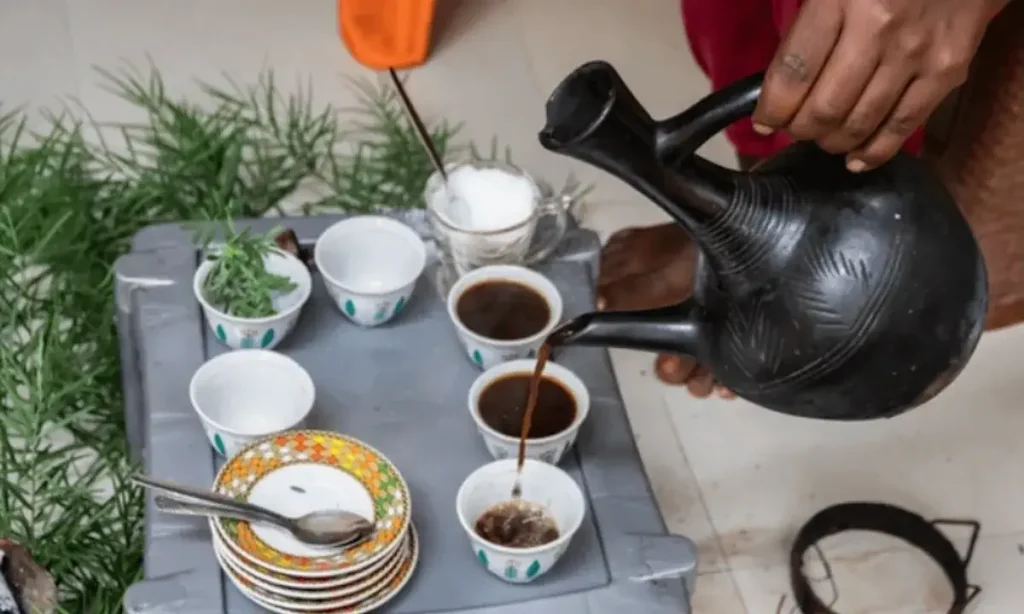
The jebena is the heart of Ethiopian coffee brewing. This elegant clay pot has a spherical base and narrow neck, designed for slow extraction and deep flavor.
Brewing Steps:
-
Add water: Fill the jebena about three-quarters full with cold water.
-
Add coffee grounds: Roughly 1 tablespoon per small cup (around 10–12g per 150ml water).
-
Boil slowly: Place the jebena on the heat until the coffee rises up the neck (but don’t let it overflow).
-
Remove from heat: Let it settle for a minute before pouring.
-
Repeat if desired: Some hosts reboil for the second and third rounds.
The coffee is poured in a thin stream from height to create a frothy top and aerate the liquid. Traditionally, it’s served unsweetened, though sugar may be offered depending on region and guest preference.
Step 5: Serving the Three Rounds – Abol, Tona, and Bereka
In Ethiopian culture, coffee is served three times, each cup symbolizing friendship, blessing, and transformation.
| Round | Name | Meaning | Strength |
|---|---|---|---|
| 1 | Abol | The first brew – strong and pure | Full strength |
| 2 | Tona | The second brew – renewal | Medium strength |
| 3 | Bereka | The final cup – blessing | Mild and smooth |
Guests are expected to stay for all three rounds. Declining is rare and may be seen as impolite.
Incense is often burned throughout, infusing the air with fragrance and spirituality. The coffee is accompanied by snacks like popcorn, roasted barley, or bread—simple, earthy pairings that enhance the moment.
Cultural Meaning: More Than a Drink
To Ethiopians, the coffee ceremony is a living tradition of hospitality—a space to reconnect with family, neighbors, or visitors.
It’s not rushed or commercial; it’s slow, deliberate, and meaningful.
In a world that prizes convenience, the ceremony reminds us of what coffee truly represents: time shared.
Ethiopian coffee culture has influenced global specialty trends too. Concepts like traceability, hand roasting, and small-batch brewing all trace their roots back to Ethiopia’s ancient rituals.
☕ How to Recreate the Ceremony at Home (Simplified)
If you want to experience the tradition without all the equipment, here’s a modern version:
-
Buy high-quality Ethiopian beans (Yirgacheffe, Sidamo, or Harrar).
-
Roast lightly if you can source green beans; otherwise, buy freshly roasted.
-
Grind manually using a burr grinder for better texture.
-
Use a moka pot or French press if you don’t have a jebena.
-
Serve in small cups, sip slowly, and share the experience.
-
Add incense or soft music to recreate the atmosphere.
This approach keeps the essence—community and appreciation—alive in a modern kitchen.
Pro Tips for Brewing Authentic Ethiopian Coffee
-
Choose single-origin beans: Ethiopia’s heirloom varietals offer unmatched complexity.
-
Use filtered water: Clean water preserves the coffee’s natural brightness.
-
Avoid paper filters: They mute the oils that give Ethiopian coffee its body.
-
Grind just before brewing: Freshness is essential for floral and fruity notes.
-
Don’t rush: Let every stage—roasting, grinding, brewing—be intentional.
Why It Matters: Preserving Heritage Through Coffee
Beyond taste, Ethiopia’s coffee tradition supports millions of smallholder farmers who depend on sustainable, traceable trade.
By embracing traditional brewing, coffee drinkers honor these communities and help preserve an art form that’s been alive for over a thousand years.
Supporting Ethiopian coffee means supporting:
-
Fair trade cooperatives
-
Cultural heritage preservation
-
Environmental sustainability
Every sip becomes a bridge between the past and the future of coffee.
Conclusion: A Ritual That Lives On
To brew Ethiopian coffee the traditional way is to experience history, art, and flavor in one moment.
It’s more than a beverage—it’s a ceremony of gratitude, a reminder that coffee began not as a product, but as a way to connect hearts and cultures.
Next time you sip a cup of Ethiopian coffee, slow down. Breathe in the aroma.
You’re tasting a tradition that has shaped the world.

❓ FAQs - how to brew Ethiopian coffee the traditional way
1. What is a jebena?
A jebena is a traditional Ethiopian clay coffee pot used to brew strong, aromatic coffee. It’s a symbol of the coffee ceremony.
2. How long does the Ethiopian coffee ceremony take?
It typically lasts 1 to 2 hours, including roasting, grinding, and serving three rounds of coffee.
3. What type of coffee beans are used?
Ethiopians use locally grown Arabica beans, often from regions like Yirgacheffe, Sidamo, or Harrar.
4. Is sugar or milk added to Ethiopian coffee?
Traditionally, no milk is used, and sugar is optional—depending on region or personal taste.
5. Can I perform the ceremony without a jebena?
Yes. A French press or moka pot can substitute, though the jebena gives a unique depth and texture.