How to Brew Kenyan Coffee: Ratios, Recipes and Methods
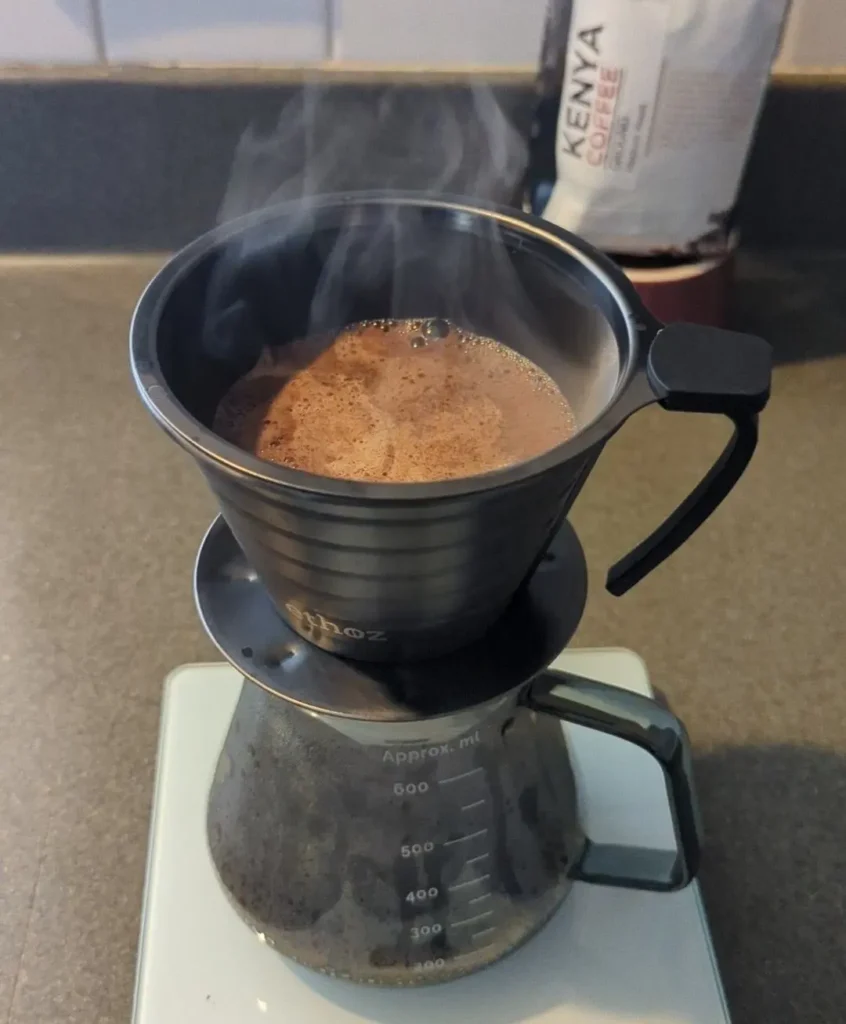
Kenyan coffee shines as a filter brew. Start with fresh washed beans, use a 1:15 to 1:18 ratio and water at 92–96 °C, and choose a method that suits the cup: pour over for clarity, French press for body or Aeropress for speed. For a coastal twist, simmer kahawa chungu with ginger.
What makes Kenyan coffee different?
Washed Kenyan Arabica is usually bright, clean and intensely fruity, which is why it suits filter brewing rather than a heavy milk base. The varieties most often linked to that profile are SL28 and SL34; the more disease-tolerant Ruiru 11 and Batian are also planted, according to the World Coffee Research Arabica variety catalog. The washed process matters as much as the variety: the cherry is pulped, fermented to remove the fruit layer, washed and dried, leaving a cleaner cup that lets blackcurrant and citrus notes come through.
- Washed processing leaves a clean cup with blackcurrant and citrus notes.
- High-altitude growing slows cherry ripening, which concentrates acidity.
- SL28 and SL34 carry complex acidity; Ruiru 11 and Batian lean rounder and more tolerant.
- Smallholder farms and cooperatives grow most of the crop.
For a fuller comparison of Arabica varieties versus Robusta, see our comparison guide. The same pattern repeats across Kenya’s growing regions, where smallholders and cooperatives deliver most of the harvest.
What you need before you brew
Gather a scale accurate to one decimal place, a burr grinder, a temperature-controlled kettle, filtered water and the dripper or press you plan to use. Keep doses between 15 g and 30 g for filter methods. A scale measures both coffee and water, so ratios stay exact. A burr grinder gives even particles; a blade grinder creates dust and boulders. Water matters too: hard, salty or chlorinated water flattens the bright notes. If you are choosing between devices, our coffee brewing styles guide explains what each one changes in the cup.
Brew ratios for Kenyan coffee at a glance
The Specialty Coffee Association coffee standards describe the framework for consistent brewing. The recipes below use a 1:15 to 1:18 coffee-to-water ratio and water between 92 and 96 °C as the filter starting point. These parameters suit washed Kenyan coffees, which reward gentle extraction and reveal blackcurrant and citrus notes. If the cup tastes sour, extraction is too low; try a slightly finer grind. If it tastes dry and bitter, coarsen the grind or lower the temperature.
| Method | Dose | Water | Grind | Temperature | Time | Ratio |
|---|---|---|---|---|---|---|
| V60 / Kalita Wave | 15 g | 250 g | Medium-fine | 92–96 °C | 2:45–3:15 | 1:16.7 |
| French press | 30 g | 500 g | Coarse | 92–96 °C | 4:00 steep | 1:16.7 |
| Aeropress | 15 g | 240 g | Medium-fine | 92–96 °C | 2:00 steep, 0:30 press | 1:16 |
The 1:15 end of the range gives a stronger, heavier cup; the 1:18 end runs lighter and more tea-like. Start near the middle, then adjust grind rather than dose for the first few brews.
Pour over with a V60 or Kalita Wave
This Kenyan coffee pour over recipe works with either a Hario V60 or a Kalita Wave. A flat-bed Kalita drains slightly more slowly, but the same dose, water temperature and total brew time apply. The result should be bright, tea-like and blackcurrant-forward; if the cup is thin, pour more slowly next time.
- Rinse the paper filter and warm the dripper.
- Grind 15 g of coffee to a medium-fine size, like table salt.
- Add the grounds to the bed, level them and zero the scale.
- Bloom with 45 g of water, making sure all the grounds are wet, and wait 30 seconds.
- Pour in slow circles until the scale reads 250 g.
- Finish pouring around 2:15, and aim for a drawdown by 2:45–3:15; if the cup tastes sharp, coarsen the grind next time.
French press
French press makes a heavier Kenyan cup because the metal mesh leaves more oils and fine particles in the brew. Use 30 g of coarse ground coffee to 500 g of water at 92–96 °C. A coarse grind keeps the mesh from clogging and reduces silt in the cup. Pour in one steady stream, stir once, and steep for four minutes. Break the crust by stirring the top layer, scoop off the foam, then fit the plunger and press slowly. Serve immediately; leaving coffee in the press keeps extracting and turns the pot bitter.
Aeropress
The Aeropress is the quickest measured option and works well with a bright, medium-fine grind. Use 15 g of coffee to 240 g of water at 92–96 °C. A paper filter keeps fines out, so the cup stays clean despite the medium-fine grind. Rinse the filter, add the coffee, then pour in the water, stir once and steep for two minutes. Press gently for 30 seconds and stop when you hear air escape. The 1:16 ratio gives a cup strong enough to drink as brewed or dilute slightly to taste.
Kahawa chungu: Kenya’s coastal bitter coffee
Kahawa chungu is a coastal Kenyan preparation rather than a measured filter recipe. It is often described as a spiced, slow-boiled coffee served strong in small cups, and it appears at stalls and gatherings along the coast. Water is brought to a boil, coffee and spices are added, and the pot simmers until the grounds settle. Coastal cooks usually balance the bitterness with spices.
- Ginger
- Cardamom
Because kahawa chungu is not measured like a pour over, ratios and times vary between households. One family may add more ginger, another more cardamom; the only constants are a vigorous boil and a dark, strong cup. Expect something closer to spiced coffee than to a bright washed filter brew. For modern twists and more coffee recipes, see our recipe collection.
Common mistakes and how to fix them
Most failed Kenyan brews are not the coffee’s fault; they are quick fixes in dose, temperature or grind.
- A grind that is too fine slows flow and over-extracts: the cup goes bitter. Coarsen it and keep the same dose.
- Water above 96 °C scalds the grounds and mutes fruit; wait a minute off the boil.
- A ratio below 1:15 hides Kenyan acidity; try 1:16 before changing the coffee.
For a wider guide to African coffee, start with origins and flavour profiles.
Frequently asked questions
How good is Kenyan coffee?
Often described as bright, blackcurrant-forward and complex when washed; it is a staple of single-origin filter menus.
How is Kenyan coffee best brewed?
Pour over with a 1:15–1:18 ratio and water at 92–96 °C preserves the blackcurrant and citrus notes.
What is kahawa chungu?
A spiced, slow-boiled coffee from the Kenyan coast, usually made with ginger or cardamom and served strong.
What grind size should I use for Kenyan coffee?
Medium-fine for pour over and Aeropress, coarse for French press.
Why is Kenyan coffee so acidic?
The washed SL28 and SL34 varieties, grown at altitude, carry the bright, often blackcurrant-like acidity the cup is known for.
Sources
Specialty Coffee Association brewing standards — coffee-to-water ratio and water temperature guidance for filter brewing. World Coffee Research Arabica variety catalog — variety profiles for SL28, SL34, Ruiru 11 and Batian.